
Cruise ships can carry thousands of passengers, but there are no police officers permanently stationed onboard.
So what happens if someone steals from you, assaults another passenger or commits a serious crime in the middle of the ocean?
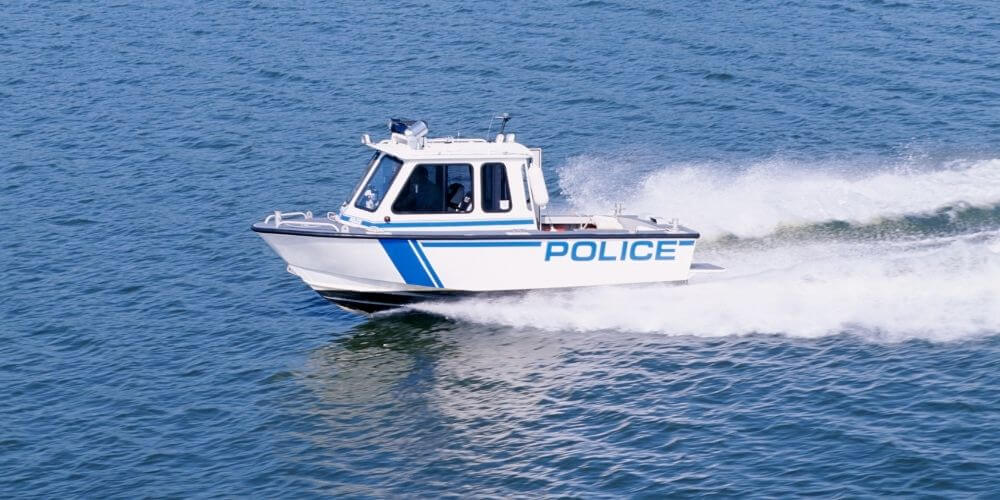
Cruise ships have their own security teams who can investigate incidents, preserve evidence and even detain passengers. But things get much more complicated when it comes to deciding which country’s police should take over.
And surprisingly, where the ship is registered can matter just as much as where it actually is when the crime happens.
Security Instead of Police
Police forces are governed and empowered by nation-states in order to protect their citizens and to prevent crime and civil disorder. National police forces may also sometimes work together to tackle international crime via the global policing coordination organization Interpol.
Cruise ships, however, are not based inside national borders and do not fit neatly under the effective jurisdiction of any one country. This means that there isn’t an obvious police force with ongoing responsibility for law and order on each cruise vessel.

Instead, cruise ships have their own security teams who act as first responders when crimes or serious incidents happen onboard. They work under the authority of the ship’s captain and can secure a scene, preserve evidence and protect passengers until law enforcement authorities can take over.
Suggested read: Are There Guns on Cruise Ships?
Crimes at Sea
Working out which country has the right to investigate a crime on a cruise ship can get surprisingly complicated.
It can depend on several things, including where the ship was at the time, where it’s registered, the nationalities of the people involved and where the cruise began or is due to end.
Under the United Nations Convention on the Law of the Sea (UNCLOS), countries can have territorial waters extending up to 12 nautical miles from their coastlines. However, that doesn’t necessarily mean the local authorities automatically take over every crime that happens onboard a foreign ship within those waters.
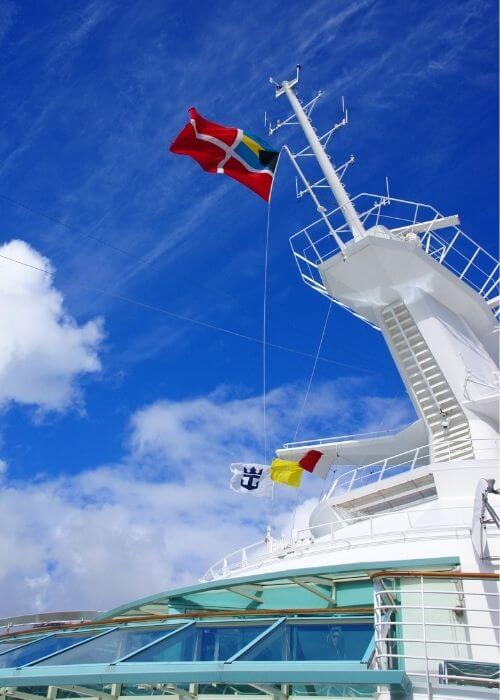
Once a ship is on the high seas, its flag state becomes particularly important. So, if a ship is registered in the Bahamas, Bahamian authorities may have jurisdiction even if the ship is sailing thousands of miles away.
But other countries can sometimes have jurisdiction too, depending on the circumstances.
That’s why a serious crime at sea could potentially involve the ship’s security team, authorities at the next port, the ship’s flag state and law enforcement agencies from the countries connected to the people involved.

Investigating Crimes
When a crime is reported on a cruise ship, the onboard security team will usually be the first to respond.
They can take steps to protect passengers, secure the scene and preserve evidence until the relevant law enforcement authorities can become involved.
When crime occurs in international waters, the ship doesn’t necessarily have to divert immediately. Depending on the circumstances, it may continue to its next scheduled port, or investigators may board when it reaches another port.
For crimes with a connection to the United States, the FBI may become involved. However, this isn’t automatic just because an American passenger is involved.
The FBI’s authority depends on several factors, including where the ship was at the time, the nationalities of the victim and suspect, where the ship is registered and where the cruise departed from or is due to arrive.
US law also requires certain serious alleged crimes on qualifying cruise ships to be reported to the authorities. These include homicide, suspicious deaths, missing US nationals, kidnapping, serious bodily injury, sexual assault, firing or tampering with a vessel and theft of more than $10,000.
Cruise Ship Security Teams – What to Expect
Ex-police or military personnel with relevant experience or qualifications may be sought for more senior cruise ship security positions. Even lower-level positions may have particular criteria (e.g. physical fitness requirements, diving certification, etc).
You may see uniformed security staff at checkpoints or patrolling around the ship, while some security personnel may be less obvious to passengers.
Cruise ships sailing through areas where piracy or other security threats are a concern may also have additional security measures in place. Exactly what these involve isn’t always made public for obvious reasons.

What Happens If You Commit a Crime on a Cruise Ship
What happens next depends on the seriousness of the incident and where the ship is sailing.
Cruise lines can take immediate action to protect other passengers and crew. A passenger may be confined to their cabin or another secure area, while serious cases can result in them being removed from the ship and handed over to law enforcement authorities.
Cruise lines can also ban passengers from sailing with them again.
For serious alleged crimes, the ship’s security team can preserve evidence and work with whichever law enforcement agencies have jurisdiction over the case.
So being in the middle of the ocean certainly doesn’t mean you’re beyond the reach of the law.
Complications of Cruise Ship Crimes
There’s a range of potential complicating factors for crime investigation on cruise ships.
International legal and diplomatic issues
Jurisdiction is one of the biggest complications when investigating crime at sea.
Depending on the circumstances, authorities from the ship’s flag state, the country it’s visiting and the home countries of the victim or suspect could potentially become involved. This can make investigating a serious incident much more complicated than a similar crime committed on land.
Maritime law versus law on land
The law at sea is not the same law you will find in any individual country. Maritime law is a unique, intricate and sometimes murky field, attempting to regulate the ungoverned spaces of the ocean. Some areas of maritime law are decades or centuries old, and may not be obviously relevant to modern cruise ship crime.
Flagging
Every cruise ship is registered, or “flagged”, in a particular country. That flag state has important legal and regulatory responsibilities for the vessel, regardless of where the cruise line itself has its headquarters.
Many cruise ships are registered in countries such as the Bahamas, Panama and Malta rather than the country where the cruise line is based.
The ship’s flag becomes particularly important on the high seas, although other countries may also have jurisdiction over particular crimes depending on the circumstances.
Potential conflicts of interest
The ship’s captain and security team are employed by the cruise company. While the primary purpose of a national police force is to tackle crime and protect citizens, the primary purpose of a cruise company is to run cruises and make money. Security officers may therefore feel under direct or indirect pressure to get a cruise moving again quickly, as much as ensuring that a crime is fully investigated.
A cruise ship can be a moving crime scene
One of the biggest challenges for investigators is that a cruise ship doesn’t stay in one place.
Passengers and crew may disembark at different ports, while the ship itself continues sailing between countries. This can give investigators a limited window in which to examine the scene, collect evidence and speak to witnesses.
That’s one reason why the ship’s security team has such an important role immediately after a serious incident, particularly when it comes to preserving evidence until law enforcement can take over.
Cruise Ship Jails
Larger cruise ships do have a type of jail, known as ‘the brig’. These safe, lockable spaces are rarely used except in cases of serious crime where prosecution is likely (e.g. trafficking drugs).
For less serious crimes, or where passengers are drunk and disorderly, they may instead be locked in their cabins.

What Crimes Happen on Cruise Ships
Serious crimes on cruise ships do happen, although it’s important to distinguish between reported allegations and crimes that ultimately result in convictions.
For cruise ships covered by US reporting laws, certain serious alleged crimes must be reported to the authorities. These include sexual assault, serious physical assault, homicide, kidnapping, suspicious deaths, missing US nationals and theft of more than $10,000.
The US Department of Transportation publishes cruise line incident reports showing allegations reported to the FBI, so this information is publicly available.
It’s important to remember that these figures are reports of alleged crimes. They don’t necessarily mean that a crime was proven to have taken place or that somebody was convicted.
Final Word
Cruise ships may not have police officers onboard, but that doesn’t mean they’re lawless places once they leave port.
The ship’s security team will usually be the first to respond to a serious incident, with law enforcement becoming involved when necessary.
The complicated part is deciding which authorities have jurisdiction. Depending on where the ship is, where it’s registered and who is involved, a crime at sea can potentially involve authorities from several different countries.
So while there might not be a police station on your cruise ship, committing a crime at sea certainly doesn’t mean getting away with it.

With respect, the above article about Law enforcement on Cruise Ships is a complete pack of lies. 60 Minutes Australia online reports : bereaved families and independent experts say no proper investigations are carried out. The FBI refuse to get involved. The attitude of the Cruise Ships industry and staff is abysmal. Their conclusion is that Cruise Ships are completely lawless, with no legal protections at all. Apparently only the place of registration provides any semblance of enquiry, and then totally inadequate, if at all.
I believe at least two national law enforcements should have jurisdiction : that from the home operation base of the Cruise Company or Ship, and from the nationality of the passengers involved.